

Garage POS System Kenya: Drive Faster, Smarter Garage Growth
Running a garage without a reliable point-of-sale system can create delays, errors, and lost income. A Garage POS system Kenya gives you one place to manage jobs, customers, payments, stock, staff, and business reports. As a result, your team can work faster while customers receive a more professional service.
A garage owner’s everyday challenge
David owns a busy garage in Nairobi. His business had good mechanics and regular customers, but most daily tasks were manual. Staff wrote job details in notebooks, prepared manual receipts, and stored customer records in different files.
At first, this system seemed affordable. However, problems increased as the garage became busier. Customers waited in long queues because staff took too long to prepare invoices. Some customers were lost because the team forgot to call them when their vehicles were ready.
David also experienced missing inventory and cash leakage. A mechanic could use a part without recording it. A cashier could issue a receipt that was difficult to match with the day’s sales. In addition, David had poor reporting, so he could not clearly see which services produced the most revenue.
Mechanic accountability was another concern. Some jobs were delayed because no one could confirm who was responsible. Customer records were sometimes forgotten, making it difficult to check a vehicle’s previous repairs or recommend future servicing.
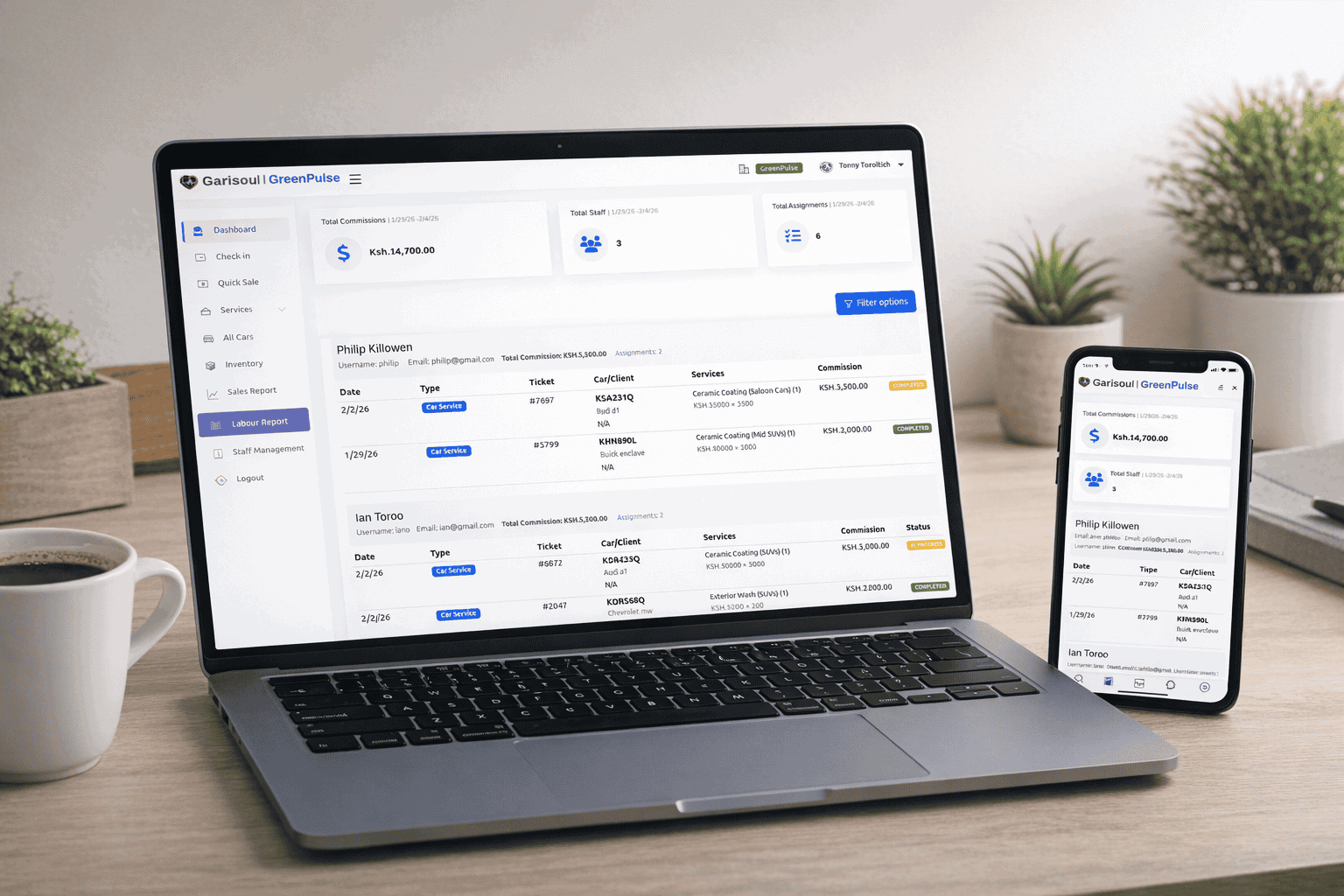
After moving to Garisoul, David began using Digital Job Cards, a Customer Database, Vehicle History records, POS tools, and Inventory Management. His team could track each job, record parts, issue Digital Receipts, and monitor payments. He could also review staff activity and Revenue Reports without searching through piles of paper.
What is a Garage POS system?
A Garage POS system is software that helps an automotive business manage sales and operations from one connected platform. While a basic POS records payments, a complete system also manages jobs, inspections, vehicle records, stock, employees, suppliers, and reports.
For example, a customer arrives for brake repairs. The receptionist creates a customer and vehicle record. The team completes Inspection Forms, opens a Digital Job Card, assigns the work to a mechanic, and records the parts used. After the repair, the POS prepares an invoice and Digital Receipt.
The system then saves the work in the Vehicle History. Therefore, the garage can quickly see what was repaired during the next visit. This approach is useful for garages, car washes, tyre centres, workshops, and fleet companies.
Why does it matter?
Manual systems fail when a business has more customers, vehicles, staff, and transactions than one person can track. Paper records can be misplaced. Spreadsheets may not update in real time. Also, staff can follow different processes, which makes errors harder to find.
A Garage Management System improves control by giving your team a shared source of information. It can reduce slow invoicing, forgotten customer records, delayed servicing, and stock errors. Furthermore, it supports a professional image because customers receive clear invoices and faster updates.
Better records can also support customer trust. When you explain the work completed, show the vehicle’s service history, and provide a proper receipt, customers understand what they are paying for. Over time, this can encourage repeat visits and referrals.
How does a Garage POS system work?
The process normally starts with the Customer Database. Staff record the customer’s contact details and vehicle information. Next, they create a job and use Inspection Forms to note the vehicle’s condition, required work, and recommendations.
Digital Job Cards show the job status, assigned mechanic, estimated cost, and completed tasks. Inventory Tracking records parts and products used during the service. Meanwhile, Stock Alerts can warn staff before essential items run out.
Managers can use Purchase Orders and Supplier Management to control buying. When the work is finished, the POS records the payment and issues a Digital Receipt. Finally, Sales Reports, Revenue Reports, and Business Analytics help owners understand performance.
Important features to look for
- Digital Job Cards: Track every job from inspection to completion and improve mechanic accountability.
- Vehicle History: Keep service details, repairs, parts, and recommendations for future visits.
- Inventory Management: Monitor stock movement, usage, purchases, and available quantities.
- Stock Alerts: Know when tyres, oils, filters, or other products require reordering.
- Purchase Orders: Organise purchasing and reduce unapproved or forgotten orders.
- Supplier Management: Store supplier details and review purchasing activity more easily.
- Inspection Forms: Record vehicle condition before work begins and improve service transparency.
- POS and Digital Receipts: Speed up invoicing and provide customers with professional payment records.
- Mechanic Performance and Staff Tracking: Review assigned jobs, progress, and staff activity.
- Sales Reports and Revenue Reports: Identify profitable services, busy periods, and business trends.
- Customer Database: Organise contacts, vehicles, service reminders, and customer communication.
- Multi-Branch Dashboard: Compare operations and results across different locations.
- Cloud Hosting or Dedicated Server: Choose an infrastructure option that fits your access and control needs.
- Software Updates and Technical Support: Keep the platform current and receive help when needed.
- Custom Branding: Present your garage name and identity on customer-facing documents.
What problems can it solve?
The right Garage POS can solve several common business problems. It can reduce long queues by speeding up customer registration, estimates, invoicing, and payment collection. It can also reduce cash leakage by matching recorded services, stock usage, invoices, and payments.
Inventory Management Software helps you understand what came in, what was used, and what remains. As a result, missing inventory becomes easier to investigate. The Customer Database also prevents forgotten records and makes follow-up communication more organised.
For a car wash, Car Wash Management Software can manage services and payments. A Car Wash POS System or Car Wash POS Kenya solution may be suitable for tracking repeat customers and daily sales. Similarly, a tyre centre can use Stock Management to monitor tyre sizes, brands, and movement.
Garage software versus manual systems
| Business area | Manual system | Garage POS system |
|---|---|---|
| Job management | Paper notes can be lost or delayed. | Digital Job Cards show status and responsibility. |
| Stock control | Counting is irregular and difficult to verify. | Inventory Tracking and Stock Alerts improve visibility. |
| Payments | Receipts may be unclear or missing. | POS creates consistent invoices and Digital Receipts. |
| Customer records | Information is spread across notebooks. | Vehicle History and Customer Database records stay organised. |
| Management reports | Reports take time to prepare. | Business Analytics provide faster operational insight. |
Who needs this software?
A small garage may need a simple Garage Management Software solution for customers, jobs, payments, and stock. A larger workshop may require Workshop Management Software, Workshop Management System features, supplier controls, and staff reporting.
Fleet companies can benefit from Vehicle Service Management Software because they need to track many vehicles and planned maintenance tasks. Auto repair shops can use Auto Repair Shop Software, while a growing car wash may need a Car Wash Management System that supports more staff and services.
Garisoul pricing and value
Cloud Starter costs KES 9,000 per quarter, with one-time onboarding of KES 7,999. It suits a car wash, tyre centre, startup, or small garage that wants to begin with a manageable investment. It provides a practical way to organise sales, customers, jobs, and stock before the business becomes more complex.
The Business Licence costs KES 59,999 once. It is better suited to multi-branch businesses, workshops, fleet companies, and established garages that require a long-term operating platform. The package includes an Annual Managed Service of KES 12,000 per year and one-time onboarding of KES 9,999.
Do not judge the price only by the subscription or licence fee. Consider the time saved on receipts and reports, the money protected through better stock control, and the additional jobs your team may handle when queues and delays decrease. Review the options on the Garisoul pricing page.
Why choose Garisoul?
Garisoul combines POS Software Kenya businesses need with wider Business Management Software features. It connects service management, customer records, Inventory Tracking, staff activity, reports, and Business Automation in one system.
The platform can grow with your business. You may begin with one location and later need more users, services, vehicles, or branches. Cloud Hosting, Dedicated Server options, Software Updates, Technical Support, Multi-Branch Management, and Custom Branding can support that growth.
Garisoul also focuses on practical workflows rather than technology for its own sake. To discuss your needs, visit the Garisoul contact page or learn more from the Garisoul website.
Common mistakes to avoid
- Choosing software only because it has the lowest price.
- Ignoring onboarding, training, data security, and Technical Support.
- Selecting a basic POS that cannot manage jobs, vehicles, mechanics, or stock.
- Failing to define who can approve purchases, discounts, refunds, and edits.
- Not training receptionists, cashiers, mechanics, and managers on their workflows.
- Buying a system that cannot support additional branches or future services.
- Keeping paper records forever instead of planning a structured digital transition.
Is a Garage POS system worth it?
For many automotive businesses, the value comes from improved control rather than one dramatic change. Faster invoicing, fewer stock errors, better staff accountability, and stronger customer follow-up can create meaningful savings over time.
Implementation depends on your business size, existing records, number of users, and chosen features. A small garage can begin with customers, vehicles, jobs, POS, and stock. Larger businesses may need more time for branch setup, data preparation, staff training, and workflow testing.
When used consistently, Garisoul gives your team a clearer way to work and gives owners better information for growth. It is a practical step away from paper-based operations and toward dependable Business Automation.
Frequently asked questions
What is the best Garage POS system Kenya businesses can use?
The best Garage POS system Kenya businesses can use is one that matches their size, services, staff, and growth plans. Garisoul combines Garage POS, Digital Job Cards, Inventory Management, Vehicle History, customer records, and reports. Before choosing, check onboarding, support, scalability, user access, and whether the system solves your daily operational problems.
Can a Garage POS system manage inventory?
Yes. A complete system can provide Inventory Management, Inventory Tracking, Stock Management, Stock Alerts, Purchase Orders, and Supplier Management. These tools help staff record stock received, parts used, and items remaining. Consequently, owners can investigate missing inventory, reorder on time, and reduce losses caused by weak manual controls.
Is Garisoul suitable for a car wash business?
Yes. Garisoul can support a Car Wash Business through Car Wash Management Software, a Car Wash POS System, customer records, service tracking, and sales reports. The Cloud Starter package may suit a startup or small car wash that wants faster payments, better receipt control, and a more professional customer experience.
How much does a Garage POS system cost in Kenya?
Garisoul Cloud Starter costs KES 9,000 per quarter, plus one-time onboarding of KES 7,999. The Business Licence costs KES 59,999 once, with an Annual Managed Service fee of KES 12,000 and onboarding of KES 9,999. The best choice depends on your branches, users, infrastructure needs, and expected growth.
Can garage software track mechanics and staff?
Yes. Garage management software can use Digital Job Cards, Mechanic Performance tools, and Staff Tracking to show assigned jobs and progress. This improves accountability because managers can see who handled each task and when it was completed. It also helps identify training needs, workload problems, and delays in service delivery.
How long does Garage POS implementation take?
Implementation time depends on the number of users, branches, vehicles, services, and records. A small garage can begin with customers, jobs, POS, and stock. A workshop or fleet company may need additional time for data preparation, workflow setup, training, and testing before using advanced reports and Multi-Branch Management.
Can the system grow with my garage?
Yes. A scalable Garage Management System should support more users, vehicles, services, branches, and reports as the business expands. Garisoul provides options such as Cloud Hosting, Dedicated Server support, Software Updates, Technical Support, and a Multi-Branch Dashboard. This allows a business to start small and add capacity when needed.
Why should I replace manual garage records?
Manual records can cause slow invoicing, lost customers, missing stock, cash leakage, delayed servicing, and poor reporting. A Garage POS system creates a more consistent process for jobs, payments, inventory, and customer history. It can save staff time, strengthen customer trust, and give owners clearer information for daily decisions and long-term growth.