
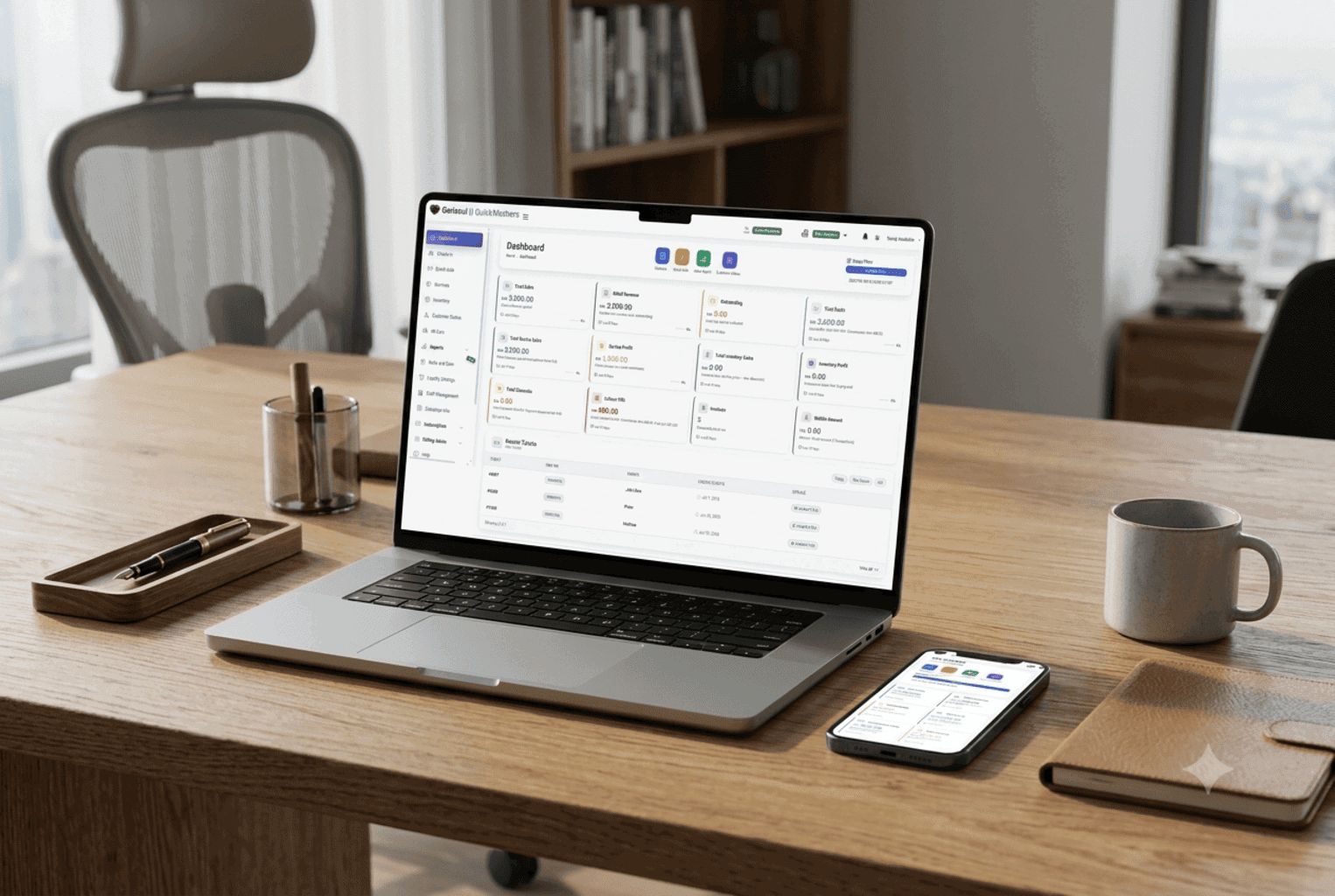
Why is my car wash losing money? Practical causes, fixes, and a plan that works
If your car wash is losing money, you’re not alone. First, we identify the hidden leaks that silently drain profits. Next, we show practical fixes you can implement this week. Finally, we explain how Garisoul helps you lock in those gains. This guide focuses on measurable outcomes—higher margins, faster service, and less wasted stock—so you can act with confidence.
Problem: Low or negative profit margins — why it happens
Many owners set prices by feel rather than cost. As a result, prices lag rising expenses. In addition, owners often ignore variable costs like chemicals, water, and disposables. Consequently, each wash can lose money even as volume grows.
Impact: Real business consequences
- Lost revenue despite steady footfall.
- Inability to invest in equipment or marketing.
- Running at a cash-flow deficit that stresses operations.
Practical fixes you can apply today
- Calculate true cost per wash: include labor, utilities, chemicals, disposables, rent allocation, and card fees.
- Create three clear price tiers (Basic, Standard, Premium) and set margins per tier—aim for 30%+ on premium services.
- Run a two-week price test for small increases and monitor demand elasticity.
Problem: Add-on and upsell opportunities missed
Many car washes rely on base services. However, upsells drive the fastest revenue growth. Staff don’t offer extras consistently, and point-of-sale systems rarely prompt upsells. Therefore, average ticket stays low.
Impact: Lower average ticket and slower growth
- Underused high-margin services.
- Lower lifetime value per customer.
- Reduced return on marketing spend.
Practical fixes
- Design profitable add-ons like wax sealant, interior quick-clean, tyre dressing, and aromatic finishes.
- Train staff to ask two simple questions at the point of sale; measure attach rate weekly.
- Introduce bundled deals and limited-time “today only” offers to increase urgency.
Problem: Inventory leaks and chemical overuse
Why it happens: chemicals, towels, and parts often move untracked. Staff may over-dispense or take stock home. Manual logs are inconsistent, so managers lack visibility.
Impact: Hidden costs that erode margins
- Higher replacement costs and unpredictable inventory spend.
- Frequent stockouts that disrupt service and hurt customer experience.
- Inaccurate cost-per-wash calculations.
Practical fixes
- Install measured dispensing dispensers for soaps and wax to standardize usage.
- Implement weekly stock counts and reconcile usage per shift.
- Use per-service consumption targets and investigate variances over 5%.
Problem: Inefficient staffing and slow throughput
Why it happens: staff scheduling often ignores demand peaks and troughs. Tasks lack standardized steps, so service times vary widely. Consequently, capacity sits idle during peaks or costs balloon during slow shifts.
Impact: Higher labor cost per car and missed revenue
- Reduced cars-per-hour capacity.
- Excess overtime costs and poor morale.
- Long customer waits and lost repeat business.
Practical fixes
- Time each service phase for one week to find bottlenecks and set standard times.
- Align shifts to demand using simple rosters rather than fixed schedules.
- Create role checklists so each team member knows exact responsibilities during each phase.
Problem: Poor reporting and financial blind spots
Why it happens: many owners make decisions using memory or manual receipts. Therefore, they miss trends like declining attach rates or rising inventory variance.
Impact: Slow, reactive decisions and missed improvement opportunities
- Underperforming services stay in the menu too long.
- Marketing dollars go to poor campaigns because ROI is unknown.
- Managers react to crises instead of preventing them.
Practical fixes
- Set up a weekly dashboard: revenue by service, add-on attach rate, cars per hour, inventory variance, and labor cost per car.
- Review KPIs every Monday and assign one owner for each metric.
- Use quick A/B marketing tests for offers and track cost-per-new-customer.
Problem: Low customer retention and inconsistent experience
Why it happens: weak loyalty programs, lack of membership options, and inconsistent service quality. Customers try a car wash once and don’t return.
Impact: High acquisition cost and unstable revenue
- Marketing needs to replace churned customers continually.
- Unpredictable daily revenue makes payroll and inventory planning hard.
Practical fixes
- Launch a simple membership: fixed price per month for X washes plus discounts on add-ons.
- Offer priority lanes or small benefits for members to increase perceived value.
- Capture basic customer data at point of sale to enable remarketing and follow-ups.
Problem: Managing multiple branches or growth challenges
Why it happens: manual systems don’t scale. Each branch runs its own books and inventory, creating inconsistencies and duplication of work.
Impact: Loss of centralized control and higher overhead
- Poor stock distribution between sites.
- Difficulty aggregating performance for decision-making.
- Higher management time and slower rollouts of promotions.
Practical fixes
- Standardize pricing and service menus across sites.
- Centralize procurement for bulk discounts and reduce per-site costs.
- Set shared KPIs and weekly cross-branch reviews.
Why manual methods fail — and how Garisoul fixes the problems
Business problem: Cash leakage from inventory, missed upsells, manual paperwork, and poor reporting.
Why manual methods fail: Paper logs and memory lead to inconsistent records. Managers cannot reconcile usage, sales, and staff performance quickly. As a result, decisions happen slowly or not at all.
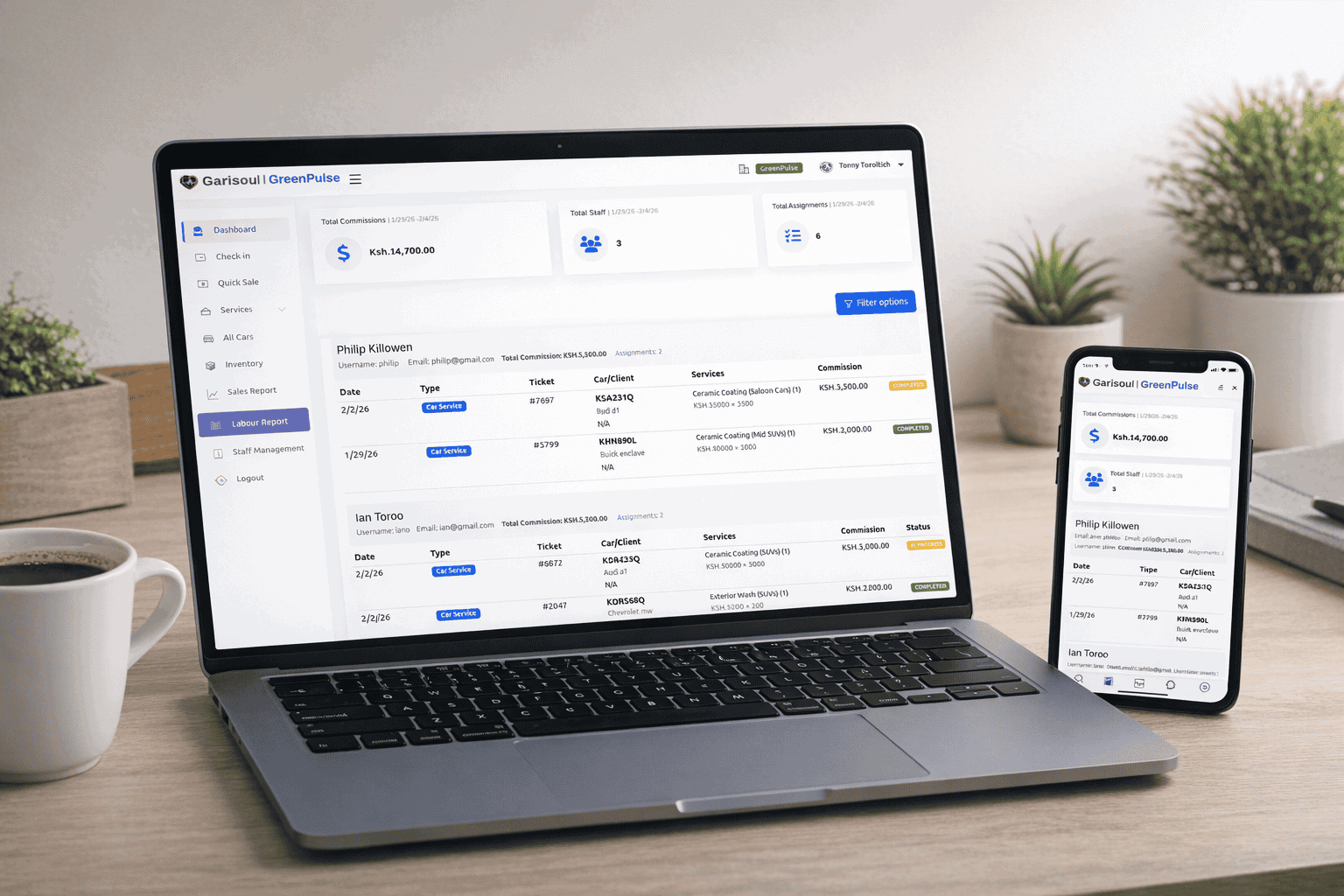
How Garisoul solves it: Garisoul centralizes job cards, inventory movements, sales reporting, and staff tracking in one cloud system. It records every service, add-on, and stock movement automatically.
Business benefit: You reduce theft and overuse, increase add-on attach rates, and gain real-time insight into profitability by service. As a result, managers act faster and measure the impact of changes.
Expected outcome: fewer stockouts, higher average ticket, and clearer decisions that increase net margins.
Specific Garisoul outcomes and why they matter
- Stop inventory loss: When stock moves with a recorded job card, variance drops and reorder costs fall. This lowers cost-of-goods-sold and improves margin per wash.
- Capture missed revenue: Digital prompts at checkout increase attach rates, raising average ticket and LTV. That improves marketing ROI.
- Reduce labor waste: Shift and job time reports highlight idle time and bottlenecks. That reduces labor cost per car and increases throughput.
- Make data-driven pricing decisions: Sales reports show which services are profitable, allowing you to reprice and bundle for better margins.
Customer success story: Riverside Wash — from loss to growth
Problem: Riverside Wash had steady footfall but shrinking profits. They suffered frequent stockouts, inconsistent upsells, and no central reporting. Consequently, owners couldn’t explain monthly losses.
Implementation: Riverside implemented Garisoul’s digital job cards and inventory tracking. They standardized service times, trained staff on upsell scripts, and launched a basic membership plan.
Results: Within 12 weeks, add-on attach rate rose from 9% to 32%. Inventory variance dropped by 70%. Average ticket increased by 20% and monthly net profit rose by 28%. Management now reviews a weekly dashboard and adjusts staffing in real time.
30–90 day action plan to stop losing money
- Day 1–7: Conduct a cost-per-wash audit and set baseline KPIs (average ticket, attach rate, inventory variance).
- Week 2: Implement measured dispensing and staff upsell scripts; start a two-week price test.
- Week 3–4: Launch a basic membership and promote it on-site and via SMS.
- Month 2: Start weekly KPI reviews and assign owners for each metric.
- Month 3: Roll out Garisoul for digital job cards, inventory tracking, and sales reports; refine pricing and scheduling from the data.
Costs, ROI and which Garisoul plan fits you
Small car wash? The Cloud Starter plan (KES 9,000 / Quarter; KES 7,999 onboarding) gives core tools to track jobs, run a POS, and manage inventory. It’s suitable if you run a single site and need fast deployment.
Growing business or multi-site operator? The Business Licence (KES 59,999 one-time; KES 12,000 annual managed service; KES 9,999 onboarding) supports multi-branch management, advanced reporting, and integrations. It is appropriate if you manage several locations or a fleet.
ROI example: A small wash that increases average ticket by 15% and reduces inventory waste by 40% typically recoups Cloud Starter costs in under three months through higher margins and lower stock spend.
FAQ
How quickly will I see results after implementing these fixes?
First results (price test, simple upsells) often appear in 2–4 weeks. Operational and software-driven changes typically show clear ROI within 8–12 weeks.
Will my staff resist new processes?
Some resistance is normal. However, training that links changes to easier daily work and small incentives for upsells usually wins staff buy-in quickly.
Is Garisoul hard to implement?
Garisoul offers onboarding and support. Most single-site implementations take under 4 weeks. The Business Licence supports multi-branch rollouts with managed services for smoother deployment.
What KPIs should I monitor first?
Track average ticket, add-on attach rate, cars per hour, inventory variance, labor cost per car, and member revenue. Review these weekly.
Internal and external links
Learn more about Garisoul: Garisoul home.
Request a demo or contact sales: Garisoul contact.
View pricing details: Garisoul pricing.
Additional small-business marketing ideas: SpotOn Vacations business tips.
Operations and workflow resources: NUR Fertility operations.
Conclusion
If you’re asking “Why is my car wash losing money?” start by diagnosing the most likely problems: hidden inventory loss, missed upsell revenue, poor pricing, and inefficient staffing. Next, apply the practical fixes in this guide and measure results weekly. Finally, consider a management platform like Garisoul to automate tracking, stop cash leakage, and scale profitably. Solving these issues now improves margins, reduces stress, and frees capital to grow. To explore how Garisoul can help your specific operation, visit the website or request a demo and see a tailored plan for your business.